
Getting Around Locally: Tricycle Rates, Habal-Habal, Motorbike Rental
Between the van legs, Palawan moves on three wheels, two wheels, and the occasional pair of flip-flops. The system is simple once someone explains it: tricycles are the taxis, habal-habal motorbikes are the off-menu option for hills and rough roads, and renting your own motorbike is the freedom upgrade with real responsibilities attached. The one rule that governs all of it — agree the fare before anything moves — will save you more money and more awkwardness than every other tip combined. Here's how each mode actually works, town by town.
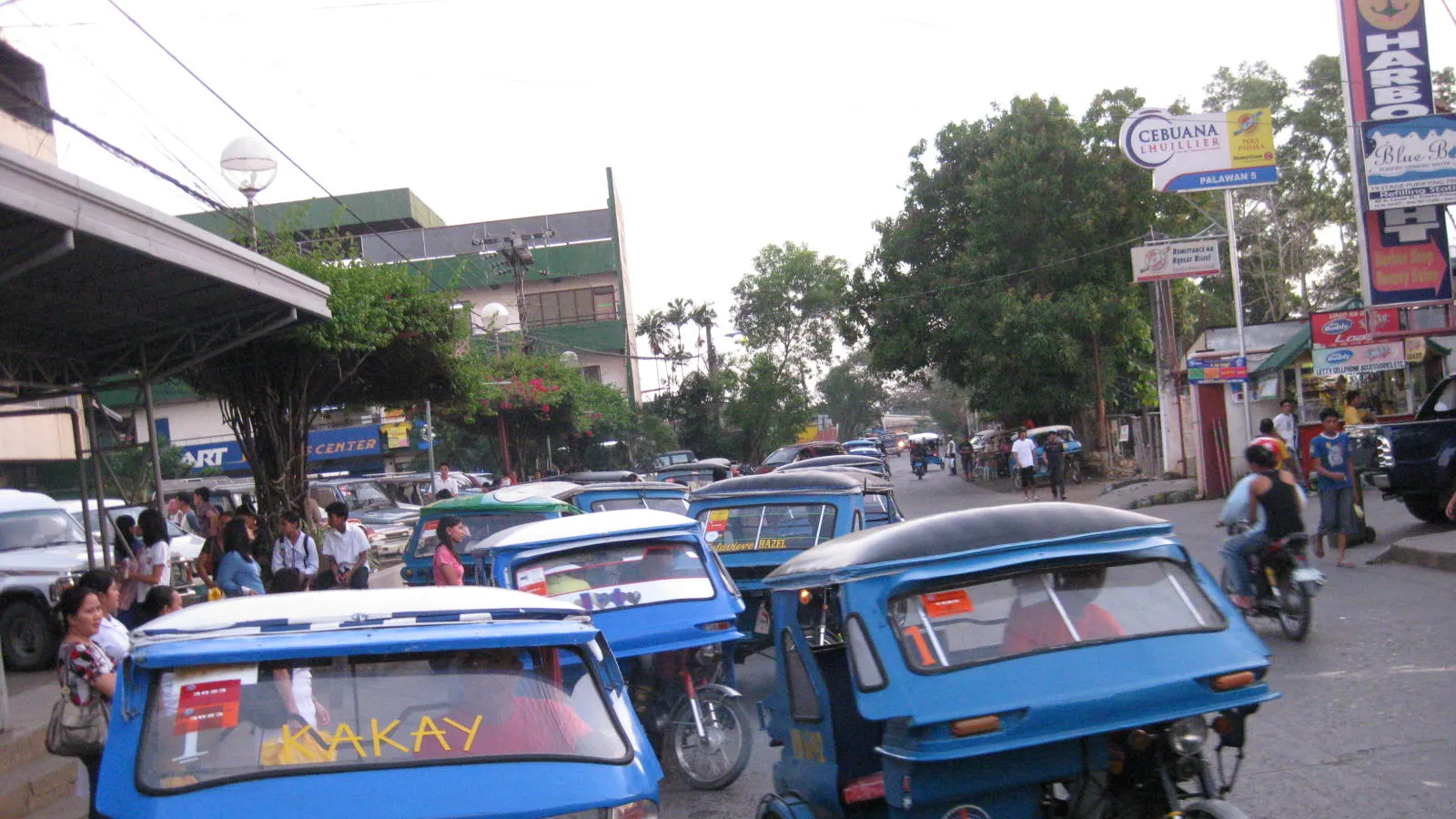
Tricycles: The Taxi Fleet
The motorbike-with-sidecar tricycle is everywhere there's pavement, and it runs on two pricing modes that tourists constantly confuse: per-person on shared standard routes (hop in, pay the going rate, share with strangers) and "special trip" — the whole tricycle, chartered, at a negotiated price. Short in-town hops cost pocket change; chartered runs to a beach or viewpoint cost real money and are quoted accordingly. The etiquette that makes it painless: state your destination, ask "how much?", agree before boarding, and have small bills ready — a driver breaking a ₱1,000 note at 7 AM is theatre nobody enjoys. Exact going rates shift by town and fuel price, so we keep them out of print and in the mouths of people who know today's number: ask your guesthouse what the standard fare is before your first ride, then you're calibrated for the week.
Two route-specific notes straight from our own price list: the Port Barton ↔ San Vicente hill road runs about ₱4,000 round trip per tricycle (two passengers — it's a genuine climb that earns every peso), and El Nido's outlying beaches (Las Cabanas, Nacpan, Duli) are classic "special trip" territory where agreeing the return pickup time in advance is worth more than any discount you could negotiate on the fare itself.
Habal-Habal: The Off-Menu Motorbike Taxi
Where tricycles can't go — steep hill roads, rough tracks, the last muddy kilometres to a waterfall — the habal-habal (a motorbike, a driver, and you on the back, sometimes with a chicken as a third passenger) takes over. It's informal, unmetered, everywhere once you know to ask, and the standard vehicle for solo travellers stranded at the San Jose Junction. Same rules as tricycles, amplified: agree the fare first, expect the price to climb with rain, darkness and luggage, and be honest with yourself about the risk math — you're on the back of a stranger's motorbike on provincial roads, usually without a helmet on offer. For a dry daytime hop with a day-pack it's a normal part of Palawan life; for a night run in rain with your backpack, spend the money on something with four wheels.
Renting a Motorbike: Freedom, With Paperwork
Scooter rental shops line the streets of El Nido and Puerto Princesa and dot Port Barton, and a bike turns the corridor's in-between places — Nacpan, waterfalls, viewpoints, empty beaches — into your private itinerary. The realities: you legally need a valid motorcycle-rated licence (foreign licences are honoured for a limited stay; enforcement is uneven but the checkpoint that cares will care), helmets are legally required and actually enforced on highways, and shops typically hold an ID or deposit — negotiate what you leave, and never leave the passport you can avoid leaving. Inspect and photograph the bike before riding off, check brakes and lights like you mean it, and respect the two things that fell every overconfident renter: gravel on curves, and afternoon rain that turns concrete to soap. Experienced riders will have some of their best Palawan days on a bike. Nervous first-timers practising on holiday roads are the accident statistics — there's no shame in the tricycle.
Negotiating Without Being That Tourist
Fare negotiation here is a social ritual, not a battle. The working approach: know the local baseline (ask your guesthouse), open with a smile and the destination, accept a fair quote without theatre, and counter a high one once, pleasantly — "the usual price is X, okay?" — before deciding. If it's still double the baseline, thank them and walk toward the next tricycle; prices correct with remarkable speed in the presence of alternatives. What never helps: haggling over amounts smaller than the bottled water you're holding, renegotiating after arrival, or treating a driver's honest quote for a long special trip as an insult — hauling you and your luggage up the Nacpan road wears out a real machine that someone maintains. Pay fairly, tip the good ones, and remember you're a guest whose daily transport budget is someone's daily income.
Luggage and the Last Kilometre
A backpack rides fine on your lap or strapped behind a habal-habal driver; a family's worth of suitcases does not, which is the unglamorous reason private vans win arrival days — the same tricycle that's perfect for tonight's restaurant run is a Tetris puzzle with 20-kilo bags. When you do move luggage locally: one bag per lap, valuables on your body rather than in the sidecar, and agree the fare with the bags visible so nobody discovers a "luggage supplement" at the far end. In El Nido, hotel and van operators shuttle bags between terminal and outlying accommodation routinely — ask rather than wrestling it yourself down a beach at noon.
The Rest of the Fleet
- Multicabs and jeepneys ply fixed routes around Puerto Princesa for coins — the local commuter layer, worth riding once for the experience, reliably slow every single time.
- Boats are local transport too: Sabang's wharf runs hops to the Underground River, island resorts shuttle guests by bangka, and in Port Barton the day's "commute" may well be a tour boat. The same coastguard weather rules that govern the tours govern every one of these hops.
- Walking is underrated in every town but El Nido at noon: Port Barton, Sabang and Corong-Corong are all end-to-end strolls, the best restaurant discoveries happen on foot, and the evening beach walk home is frequently the day's highlight nobody planned.
- The long legs stay with the vans: nothing local replaces the corridor transfers — tricycles don't do 230 kilometres, and on the rare occasion a guest asks for a quote anyway, the number does the explaining for us.
Town by Town, in One Line Each
| Town | The local mix |
|---|---|
| Puerto Princesa | Tricycles everywhere, multicabs on routes, rentals for the confident — the only town big enough to need navigation |
| Sabang | Walkable village + boats; tricycles for waterfalls and the road out |
| Port Barton | Walk everything in town; habal-habal or tricycle for beaches and the San Vicente hill road |
| San Vicente / Long Beach | Tricycles along the beach road — distances deceive, 14 km is not a stroll with luggage |
| El Nido | Walk the town, tricycle to Corong-Corong and Las Cabanas, special-trip or scooter for Nacpan |
Good to Know
How much does a tricycle cost in Palawan?
Town hops: small change, at a standard per-person rate your guesthouse can quote you today. Chartered "special trips" to beaches and viewpoints: negotiated, and entirely reasonable once you know the local baseline. The only bad fare is the one agreed after the ride.
Do I need an international licence to rent a scooter?
You need a valid licence with motorcycle entitlement; foreign licences are honoured for short stays, and an IDP alongside a non-English licence spares you roadside debates. The practical trio: licence in pocket, helmet on head, bike photographed before departure.
Is the habal-habal safe?
It's a spectrum you control: dry daylight hop with a day-pack, experienced driver — routine. Rain, night, luggage, hurry — that's when you pay for four wheels instead. Locals make exactly the same calculation daily.
Are tricycles safe at night?
Ordinary-caution safe in the tourist towns — drivers are known quantities in small communities, and the evening restaurant run is routine. The practical night issues are supply and visibility: tricycles thin out late (El Nido after the bars, Port Barton after ten), and unlit provincial roads argue for the established route over the scenic shortcut. If you're staying somewhere remote, arrange the return ride before you leave, not after the kitchen closes.
How do I get from Puerto Princesa airport into the city?
The airport sits practically in town — tricycles and vans wait at arrivals, and most city hotels are minutes away. If you're heading straight up the corridor instead, skip the city hop entirely: our airport transfers and corridor vans pick up at the terminal itself.
Can I use Grab or ride-hailing apps?
Not meaningfully in Palawan — this is tricycle-and-negotiation country. The apps' role on your trip is messaging your guesthouse to ask what the fare should be, which works better than any algorithm.
Let the locals handle the last kilometre — and book the long ones properly: every corridor leg between Puerto Princesa, Sabang, Port Barton, San Vicente and El Nido is on our transportation pages, hotel pickup included, price published, no roadside negotiation required.