
Puerto Princesa to Port Barton: How to Get There (and the San Jose Junction Problem)
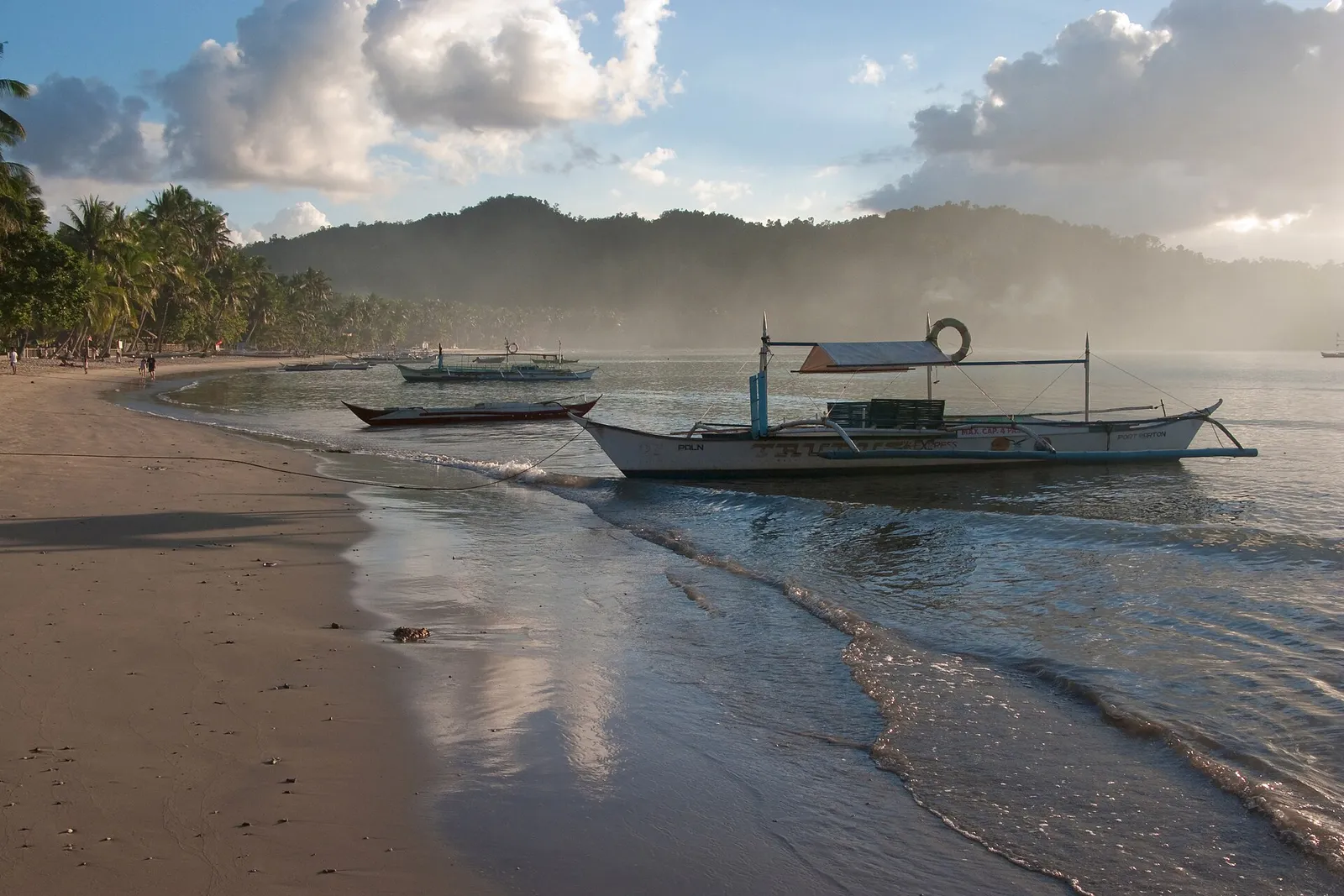
Port Barton is Palawan's laid-back middle child — a small beach village in San Vicente, about halfway up the coast between Puerto Princesa and El Nido, loved for its quiet sand, island-hopping tours and slow pace. There's no airport and no ferry link, so everyone arrives the same way: by road from Puerto Princesa, in about 3 to 3.5 hours. The direct van is the obvious answer; the cheap-looking alternatives mostly funnel you into the one trap this route has — being dropped at the highway junction, roughly 22 winding kilometres short of the beach. Here's how each option really works.
| Option | Price | Time | Where it leaves you | Verdict |
|---|---|---|---|---|
| Shared van (direct) | from ~₱850/seat | 3–3.5 hrs | Port Barton terminal | The default. Book it. |
| Private van | from ~₱7,500/vehicle | 3–3.5 hrs, your schedule | Your guesthouse door | Groups, late arrivals |
| Transfer + Underground River | see route page | full day | Your guesthouse door | Sightseeing en route |
| Bus toward El Nido | cheapest | slow + a gamble at the end | San Jose Junction, ~22 km short | Only with time and patience |
The Route — and Where the Junction Bites
From Puerto Princesa the road runs north up the national highway for around two hours to the barangay of San Jose in Roxas municipality — and there, at an unremarkable crossroads everyone calls the San Jose Junction, the Port Barton road leaves the highway and winds roughly 22 kilometres over the hills to the coast. Direct vans turn left and take you all the way in. Everything else — the El Nido buses, some rideshare arrangements, the occasional bargain "to Port Barton" ticket that wasn't — continues straight and leaves you standing at the junction with your bags.
Getting from the junction into town is a negotiation, not a schedule: waiting shared rides when they feel like filling, or a habal-habal (motorbike taxi) over the hills with your backpack between the driver's knees. It's all survivable and occasionally fun — and after a long travel day, in afternoon heat or rain, it's exactly the ending you'd have paid a few hundred pesos to avoid. That's the entire argument for the direct van in one sentence.
The paved-but-winding final stretch is also why the last half hour gets people: if anyone in your group is motion-sensitive, take the tablet at the halfway stop, not at the first hairpin.
If you do end up at the junction anyway
It happens — a bus bargain, a misunderstood booking, a change of plan. The junction has sari-sari stores, shade and a steady dribble of onward transport, so it's an inconvenience, not an emergency. Rules of the road: agree the fare to Port Barton before anything moves, per person and per bag; expect motorbike rates to climb with rain, darkness and desperation, in that order; and if it's already late afternoon, weigh an hour's wait for a filling shared ride against paying the solo rate — arriving after dark to a guesthouse you've never seen is the outcome worth spending against. Keep small bills accessible; nobody at a crossroads has change for a thousand.
Option 1: Shared Van — the Default
A seat on a shared air-conditioned minivan costs from around ₱850 per person, with scheduled departures from roughly 6:00 AM to 3:00 PM daily. Pickup covers hotels in the city proper and Puerto Princesa International Airport; drop-off is at the Port Barton terminal and central stops, a short walk or tricycle ride from most guesthouses. Note that ceiling on departures: there is no evening van, so a late flight into Puerto Princesa means either a night in the city or the private option below.
Best for: solo travelers and couples — it's the cheapest direct option with hotel pickup, and "direct" is the operative word on this route.
Option 2: Private Van — Door to Door
A private van costs from around ₱7,500 for the whole vehicle (up to 10 passengers) and goes door to door: airport or hotel pickup at whatever time you choose, drop-off at your Port Barton guesthouse. For groups the per-head gap over shared seats narrows fast, and it's the only comfortable option for late-afternoon or evening arrivals once the shared vans have stopped running — the alternative being a Puerto Princesa hotel night you didn't want.
Option 3: Transfer with Underground River Tour
Sabang — the jump-off for the UNESCO-listed Puerto Princesa Underground River — sits on the same side of the island. The Puerto Princesa to Port Barton transfer with Underground River tour handles permits, boat and the river cruise as a stopover and delivers you to Port Barton by evening — a full sightseeing day out of a travel day, and the pattern our 10-day Palawan itinerary is built around.
Option 4: The Bus — Cheap, Honest, and Junction-Bound
Cherry and Roro buses run the Puerto Princesa–El Nido highway from the Irawan (San Jose) terminal, and fares undercut everything. But no bus turns down the Port Barton road — you ride to the junction, get off, and solve the last 22 kilometres yourself as described above. As people who sell van seats we have an obvious interest here, so take the honest version: if you're alone, patient, packing light and counting pesos, the bus-plus-habal-habal combination works and makes a story. If you're two or more people, the shared van usually costs barely more than the pieces would — and arrives at the beach, not at a crossroads.
Arriving: Your First Hour in Port Barton
The van drops you at the small terminal a few sandy streets from the water; most guesthouses are a short walk or a minutes-long tricycle. Use the first hour well: check in, then book tomorrow's island-hopping tour before the beachfront desks close — morning boats organise the night before here, not at dawn. Confirm your onward van (north to El Nido or back south) while you're at it, since this route runs fewer departures than the main corridor. Then the important part: the west-facing bay does its sunset thing around six, every table on the sand has a view, and your trip's Port Barton chapter — the one covered properly in Port Barton vs El Nido — starts there.
Practical Tips
- Bring cash. Port Barton has very few ATMs and they're often empty; many businesses are cash-only. Withdraw everything you'll plausibly need in Puerto Princesa before you leave — then add a third more, because the island tour, the eco-fees and the beach bar all take the same notes.
- Book ahead in high season (December to May) — shared van seats fill quickly, and this route has fewer departures than the El Nido corridor.
- Aim for a morning van. You'll arrive with daylight to find your guesthouse, book the next day's island tour, and claim a sunset beanbag on the sand — the full case for morning departures is the same here as on every other Palawan road, only more so given the fixed 3:00 PM cutoff.
- Flying out later? The return trip takes the same 3 to 3.5 hours; leave Port Barton at least 5 hours before check-in closes. See Port Barton to Puerto Princesa transfers.
- Continuing north? Direct vans also run from Port Barton to El Nido in about 4 hours — see Port Barton to El Nido — no backtracking to the junction required.
Good to Know
What exactly is the San Jose Junction?
The crossroads in Roxas municipality where the Port Barton road leaves the Puerto Princesa–El Nido national highway, about two hours north of the city. Direct vans turn here and continue over the hills to the beach; buses and El Nido-bound vans don't, which is how unsuspecting travellers end up hitching the last stretch with their luggage. The rule that saves you: if a cheap ticket doesn't explicitly say "Port Barton proper", assume it means the junction, and ask out loud before paying.
Is Port Barton reachable from El Nido without going back to Puerto Princesa?
Yes — direct vans link El Nido and Port Barton over the same junction in about 4 hours, both directions, no highway backtrack. It's the middle leg of the classic south-to-north route, and how Port Barton vs El Nido stops being a choice.
Can I drive or ride a motorbike there myself?
Rented motorbikes make the trip in the dry months if you're an experienced rider — the junction road's hills and hairpins are the test, and they're a genuine one with luggage on the back. Fuel up in Roxas or at the junction, avoid arriving after dark, and in heavy rain don't romanticise it: take the van and collect the bike story another day, on a day trip, with dry brakes and nothing strapped behind you.
Compare every option with live prices on our Puerto Princesa to Port Barton route page. Port Barton is Days 4–5 of our 10-day Palawan itinerary — see where it fits in the bigger route.