
El Nido to Coron: Ferry vs. Flight
There is no road from El Nido to Coron — Coron town sits on Busuanga, a separate island across the Linapacan Strait — so the choice is simple: take the morning ferry across open water, or fly via the small airports. For most travellers the ferry is the default: it leaves from town, costs a fraction of flying, and delivers you to Coron by early afternoon on a normal day. The flight exists for people with more budget than time — when seats are available at all. Here's how to choose, and how not to get burned by the one thing that overrules both: the weather.
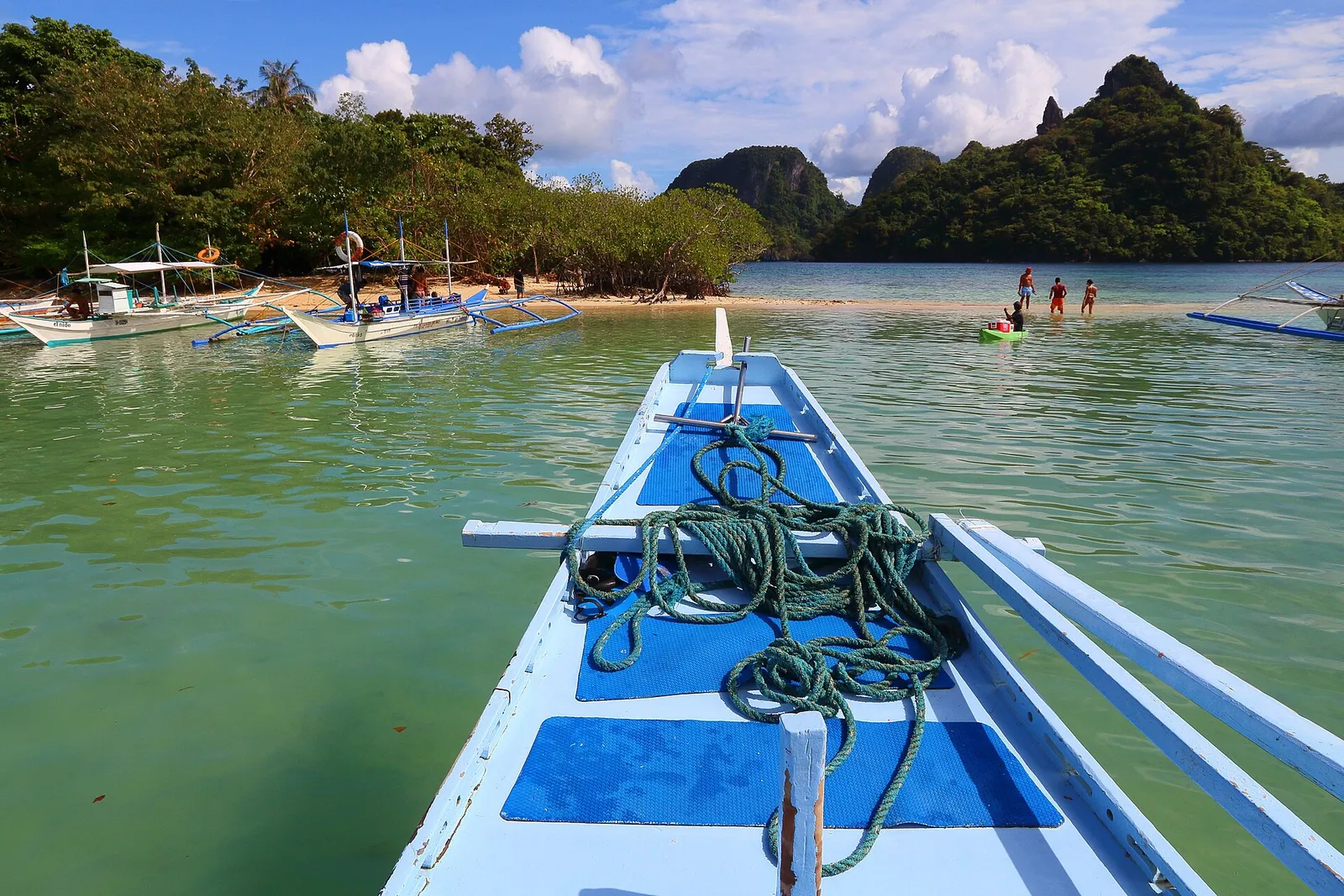
Ferry vs. Flight at a Glance
| Ferry | Flight | |
|---|---|---|
| Route | El Nido port → Coron town pier | El Nido (Lio) → Busuanga airport, then ~30–45 min by road to town |
| Time door to door | Most of a morning, on a normal day | Short hop — but airport transfers at both ends eat the saving |
| Cost | Budget-friendly | Premium, when seats exist at all |
| Reliability | Weather-dependent; suspended in rough seas | Weather-affected too, but less often |
| Frequency | Daily departures in season, typically morning | Limited and seasonal — check current schedules |
| Book | A day or more ahead in peak season | As far ahead as you can |
Deliberately missing from that table: exact schedules and fares. Operators, timetables and prices on this crossing change often enough that any number printed here would eventually be a lie — confirm the current schedule when you book, a day or two before you sail.
The Ferry: What You're Actually Signing Up For
This is not a bay-hopping bangka ride. The crossing traverses the Linapacan Strait — genuinely open sea — and takes the better part of a morning on the fast boats, longer on slower vessels. On a calm amihan day it's a scenic, comfortable trip past some of the least-visited islands in the Philippines. On a marginal day it's a rolling, spray-soaked few hours that seasick-prone travellers remember vividly. The practical kit: take the motion-sickness tablet before boarding, keep electronics in a dry bag, wear the jacket (air-con cabins run cold, open decks run wet), and put your bag where you can see it.
Buy tickets at least a day ahead in high season — Christmas to May, when boats genuinely fill — and reconfirm the departure time the afternoon before. Departures cluster in the morning, and port formalities (terminal fees, manifests, loading) mean arriving well before the printed time. Most of all: the coastguard, not the operator, decides whether boats sail. When the swell is up, the crossing is suspended, everyone waits, and no ticket class argues with that.

The Flight: Short, Scenic, Scarce
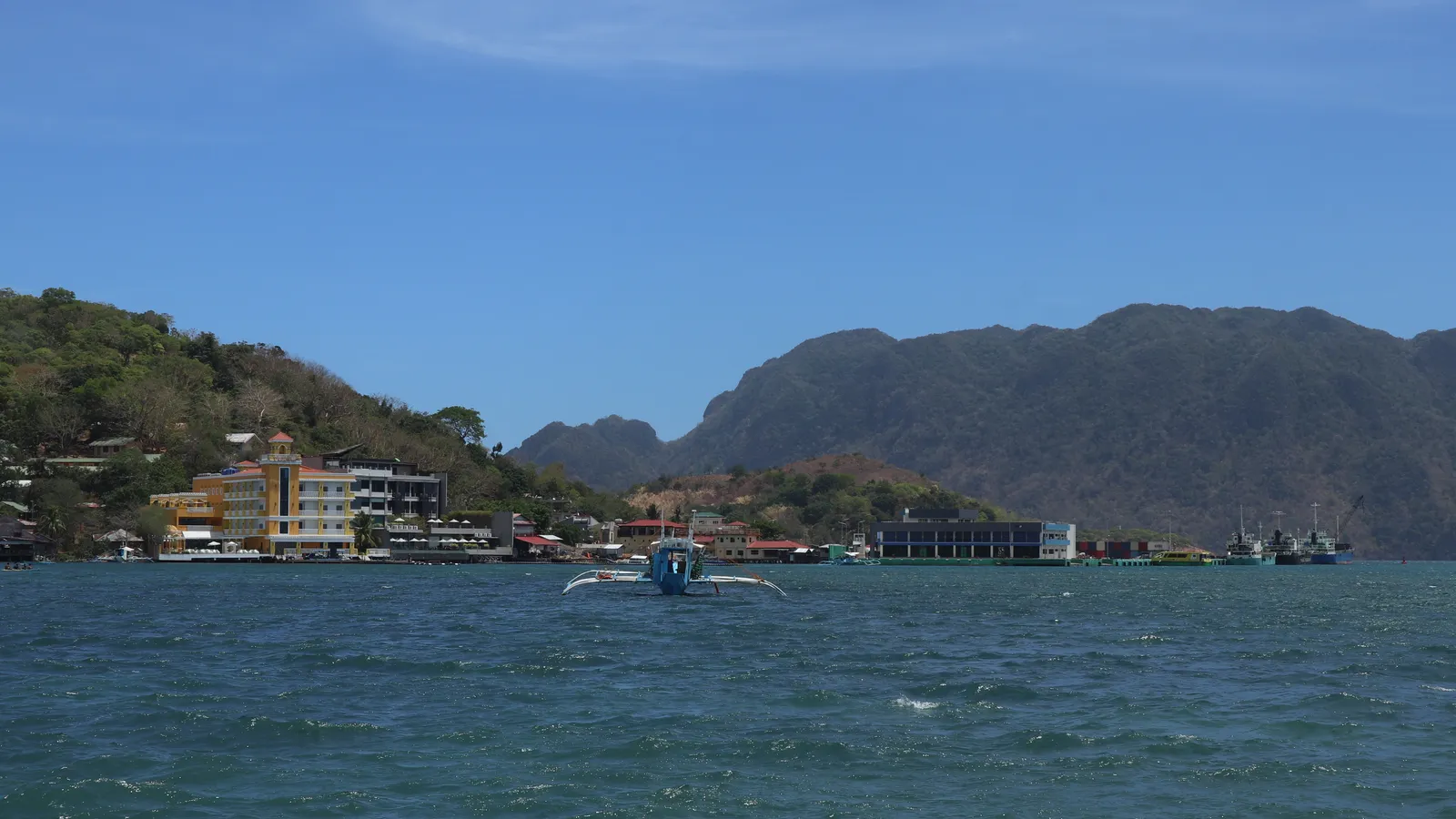
Small carriers have operated the hop between El Nido's Lio airport and Busuanga on and off, and availability genuinely changes by season — some months it's bookable, some months it isn't offered at all. When it exists, it's a spectacular few minutes over the same islands the ferry threads through, at several times the price. Factor in the full journey, not just the flight time: getting to Lio, check-in cutoffs, and the 30–45 minute road transfer from Busuanga airport into Coron town at the far end. The flight wins when you're prone to seasickness, travelling in the habagat months when crossings get suspended, or simply short on days and long on budget. If your dates depend on it, check the current schedule before you build the itinerary — not after.
The Morning of the Crossing
How the day actually runs: reconfirm the sailing the afternoon before — this is when weather suspensions are usually announced — and have breakfast before you head to the port, not after. Bring cash for the terminal fee (small, but cash-only), have your ID with the name on the manifest, and be at the terminal comfortably ahead of the printed departure; boarding is by manifest check, bags get stacked, and latecomers negotiate with physics, not staff. The crossing itself has three acts: the sheltered sweep out of Bacuit Bay with karst walls on both sides, the open middle where the horizon flattens and the boat finds whatever rhythm the strait is in that day, and the long approach into Coron through the Calamianes — scattered islands, fish pens, stilt villages, and finally the town pier itself. Doorway to guesthouse, give the whole thing the morning and count anything faster as a bonus.
Arriving in Coron, tricycles meet the boats and town is minutes away. Give yourself the afternoon to settle and book the next days' island tours — Kayangan Lake, the Twin Lagoon, the WWII wreck sites that make Coron diving famous — for the days that follow, with the same book-boats-early logic you used in El Nido.
The Weather Overrules Everything
This crossing is the single most weather-exposed link in any Palawan itinerary. In amihan (roughly December to May) suspensions are the exception; in habagat (June to October) they're a live possibility any given week, and multi-day suspensions happen. The full seasonal picture is in Palawan month by month, but the two rules worth engraving are these: never schedule the ferry the day before a flight, and in habagat, treat Coron as a bonus destination rather than a commitment. A suspended sailing with a buffer day is an anecdote; without one it's a missed international connection.
Booking Tactics That Actually Matter
Three ways to buy the ferry: online in advance, through your El Nido accommodation, or at the ticket office in town. Online locks a seat but marries you to a date on the most weather-fickle route in Palawan; the local options cost you nothing in flexibility and let you look at the sky first. Our working rule for guests: in the December–May peak weeks, buy one or two days ahead however you like, because boats genuinely sell out; the rest of the year, buy the day before, after the afternoon forecast. Either way, know the operator's rebooking policy for weather suspensions before you pay — practices differ, and the time to learn them is not on a pier at 6:30 AM. And whatever your ticket says, the buffer day after the crossing is the real insurance policy; it costs one night's accommodation and saves entire itineraries.
So: Ferry or Flight?
- Take the ferry if you're on any kind of budget, your dates fall in the dry season, and you've left a buffer day after the crossing. This is what most travellers should do, and what we'd do ourselves on almost any dry-season trip.
- Fly if the route is operating on your dates and you're seasick-prone, habagat-bound, or trading money for time with open eyes.
- Skip Coron this trip if it would only get one rushed day. Our 10-day Palawan itinerary makes the honest case: Coron rewards two or three days, and El Nido will happily absorb the time you free up.
Good to Know
How long does the El Nido to Coron ferry take?
Plan on it consuming the morning: boarding, the open-water crossing, and arrival formalities. Fast boats are quicker than the older vessels, and sea state moves the number more than the brochure does — confirm the current timing for the specific boat when you book.
Can I do Coron as a day trip from El Nido?
No. The geometry doesn't work — you'd spend the entire day on boats for minutes in Coron. The realistic minimum is one night; the trip Coron deserves is two or three. If that doesn't fit, see the itinerary logic above and save it.
Is the crossing safe?
It's a regulated, coastguard-supervised route run daily in season — and the reason it feels safe is precisely that sailings get suspended when conditions are bad. Respect the system: build the buffer day instead of resenting it, and don't board a boat the coastguard wouldn't.
Does the ferry run both directions every day?
In season, boats work the route in both directions on most days, but don't assume symmetry — a vessel out of position after a suspension can thin one direction's schedule for a day or two. If your Coron→El Nido return matters (say, it feeds the van to a Puerto Princesa flight), reconfirm it locally a day ahead, exactly as you did on the way over.
Which direction should I do — El Nido to Coron, or Coron to El Nido?
Both run; pick by your flights. Flying home from Manila? Coron-last works, with Busuanga as your exit airport. Flying out of Puerto Princesa? El Nido-last keeps the long road leg at the end — see timing your van for your flight for that half of the plan.
The ferry leaves early — so the real first step is being in El Nido the night before, unpacked and ready. Book your Puerto Princesa to El Nido transfer with an arrival a full day ahead of the crossing, and the most weather-exposed leg of your trip inherits the one thing that protects it: slack.