
Palawan Month by Month: Amihan, Habagat, and When Boats Actually Run
The short version: the best time to visit Palawan is the amihan season, roughly December through May, when the northeast wind leaves the west-coast bays calm and island-hopping boats run almost every day. June through October is habagat — the southwest monsoon — when El Nido, Port Barton and San Vicente face the weather head-on and the coastguard suspends boat trips at short notice. The roads don't care either way: vans run every month of the year. Here's the honest month-by-month picture from people whose business depends on it.

The Two Seasons That Matter
Amihan (the northeast monsoon, roughly late November to May) is Palawan's dry season. The wind comes off the mainland side, so the west-facing coasts — Bacuit Bay, Port Barton, Long Beach — sit in shelter. Seas are calm, visibility is good, and tour cancellations are the exception rather than the rule. This is the Palawan of the brochures, and the season the whole tourism calendar is built around.
Habagat (the southwest monsoon, roughly June to October) pushes wind and swell straight onto those same west-facing coasts. It does not rain all day every day — the pattern is heavy bursts, often in the afternoon or overnight, with bright spells between — but the sea state is the real issue. When the coastguard judges the swell too rough, boats stay in port, full stop, and no operator can talk their way around it. That's the mechanism behind every "our tour got cancelled" review you've read.
One more thing worth knowing: Palawan sits south and west of the main Philippine typhoon belt. Direct hits are rare compared with Luzon or the Visayas, but late-season storms passing to the north can still throw wind and rain across the island, especially from October to December.
Month by Month
| Month | Season | Boats | Crowds | Verdict |
|---|---|---|---|---|
| January | Amihan | Reliable | High | Excellent |
| February | Amihan | Reliable | High | Excellent — our pick |
| March | Amihan | Reliable | High (Holy Week spikes) | Excellent |
| April | Amihan, hot | Reliable | High (Holy Week spikes) | Excellent, hot |
| May | Late amihan, hottest | Mostly reliable | Easing | Very good value |
| June | Habagat begins | Interruptions start | Low | Gamble, cheap |
| July | Habagat | Cancellations likely | Low | Flexible travelers only |
| August | Peak habagat | Least reliable | Low | Riskiest month |
| September | Habagat | Cancellations likely | Low | Flexible travelers only |
| October | Late habagat | Improving, storm watch | Low | Transition gamble |
| November | Shoulder | Usually fine | Building | Underrated |
| December | Amihan | Reliable | Peak (holidays) | Great, book early |
December to February — cool, dry, busy
The classic window. Calm seas, the coolest evenings of the year, and near-daily boat departures — which is exactly why Christmas to New Year and the weeks around Chinese New Year are the most booked-out stretch of the calendar. Vans, rooms and El Nido tour slots all sell ahead; if this is your window, work through the 10-day itinerary's book-ahead checklist early.
March to May — hot, still dry
Sea conditions stay friendly while the temperature climbs; April and May are the hottest months, and Holy Week turns every beach town Filipino-family-busy for one intense week. May is the quiet bargain end of the dry season — still mostly boat-friendly, with rooms easier to find.

June to October — habagat
Prices drop, crowds vanish, and the island is at its greenest. The trade-off is reliability: some weeks pass with barely an interruption, others lose several boat days in a row, and there's no way to know which you'll draw. August tends to be the roughest stretch in our experience. If you travel in habagat, stack the odds: stay flexible, put your boat days early in each stop so a cancellation can be rebooked, and never plan a ferry crossing the day before a flight.
November — the underrated shoulder
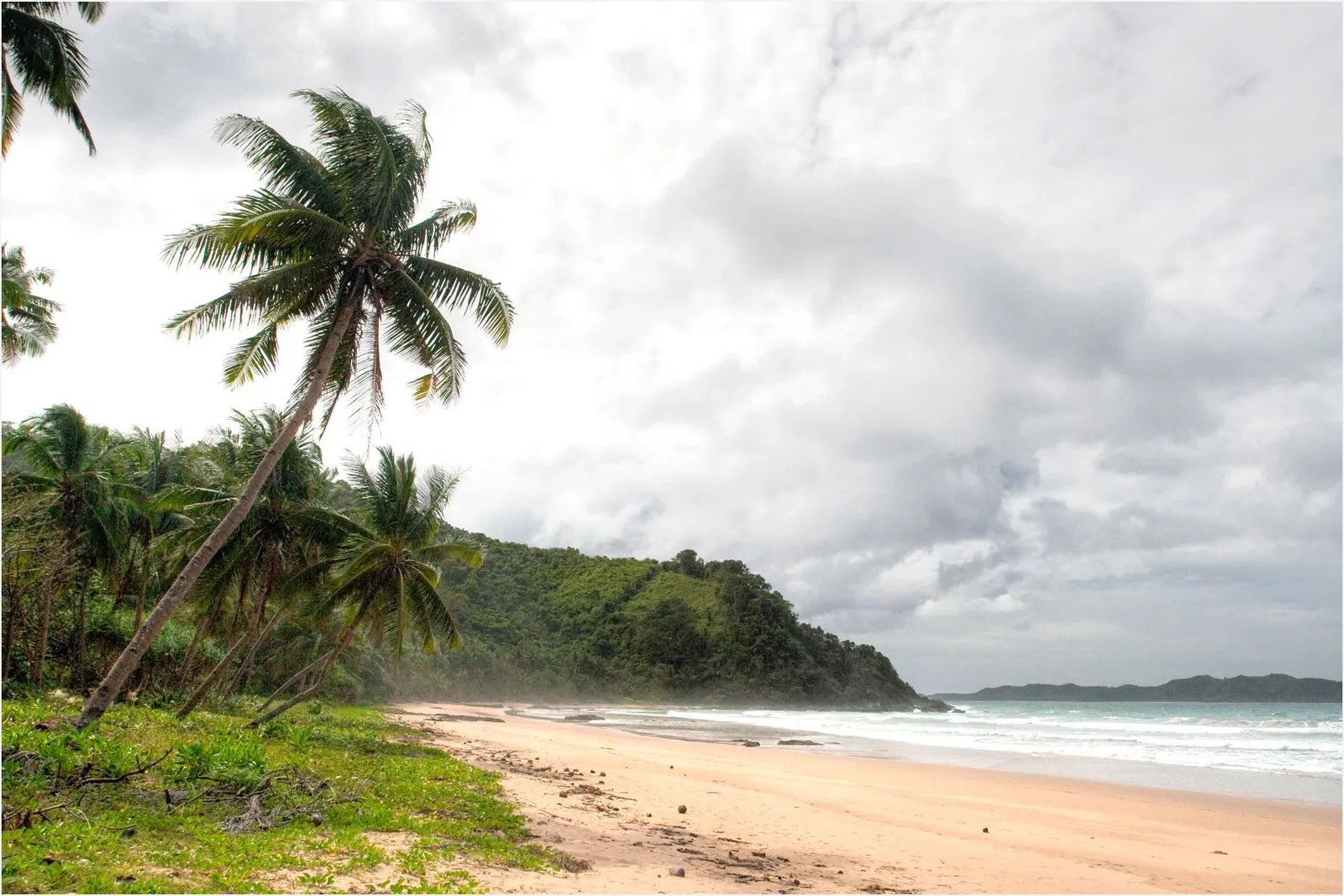
Habagat winds down, the holiday crowds haven't landed, and boats are usually running again. Keep half an eye on late-season storms passing north of the island, and November rewards you with dry-season conditions at shoulder-season prices. If you can travel on short notice, this is the month to watch the forecast for a week and pounce: the landscape is still green from the rains, the bays are settling, and you'll share Big Lagoon with a fraction of the January crowd. It's the window we quietly recommend to returning guests who've already done the peak-season version of the trip.
Planning a Habagat Trip: A Worked Example
Say your only window is August, the roughest stretch of the calendar. The trip still works — it just needs different engineering. Keep the route the same as the dry-season version, but flip the priorities:
- Put boat days first at every stop. Arrive in Port Barton, book the island-hopping tour for the very next morning — if it cancels, you still have a second chance before you move on. Same in El Nido: Tour A on your first full day, not your last.
- Anchor the itinerary on all-weather days. The Underground River, waterfalls, town days and the road legs themselves become the backbone; the lagoons become the bonus.
- Never stack a boat, a ferry and a flight on consecutive days. One suspension cascades through all three. Give the ferry its own buffer or skip it entirely.
- Book refundable or rebookable where you can. Operators who work these bays all understand coastguard suspensions; anyone promising you a guaranteed boat day in August is lying to you.
Travelers who do this usually come home delighted — the low-season island, greener and quieter, is a genuinely different and underrated trip. The ones who come home angry are the ones who booked a dry-season schedule in a habagat month and left the weather no room to happen.
What Keeps Running in Any Month
- The vans. Road transfers between Puerto Princesa, Sabang, Port Barton, San Vicente and El Nido run every day of the year — see the Puerto Princesa to El Nido transfer guide. Rain slows the winding sections; it doesn't stop them.
- The Underground River, most days. The Underground River runs inside a sheltered cove and cancels far less often than open-water island hopping — a good habagat-season anchor activity.
- The dropzone, weather-window permitting. Tandem jumps at San Vicente operate year-round around cloud and wind windows — see skydiving in Palawan.
- Waterfalls and inland trips — arguably better in the green months, when they're actually flowing.
So When Is the Best Time to Visit Palawan?
If boat days are the point of your trip — and for most Palawan first-timers they are — aim for late January to early April: past the holiday peak, before the worst heat, with the sea at its most cooperative. February edges it for us. If your dates land in habagat instead, don't cancel — trade the packed island-hopping schedule for a slower trip, keep a buffer day at each stop, and lean on the things that run regardless.
Good to Know
Does it rain all day during the rainy season?
Rarely. Habagat rain usually arrives in heavy bursts with bright spells between; multi-day washouts happen when a storm system sits over the region, not as the daily default. The bigger practical issue is sea state, not getting wet.
How often do boat tours actually get cancelled?
In amihan, seldom — a handful of days across a whole season. In habagat it varies too much for an honest single number: some weeks run nearly full schedules, others lose several days in a row. That unpredictability, not constant cancellation, is the real cost of a habagat trip.
Do typhoons hit Palawan?
Direct hits are rare — the island lies south of the main typhoon track. But storms passing north of Palawan can still bring days of wind and rain, most often between October and December, so watch forecasts in those months.
When is Palawan cheapest?
Habagat, June to October — accommodation discounts are widespread and even peak spots feel unhurried. Van fares stay roughly level year-round; it's rooms and tours where the low-season difference shows.
Does habagat affect the El Nido–Coron ferry?
More than anything else on this list. It's an open-sea crossing, so it's the first service suspended when the swell picks up and the last restored. In habagat months, treat the ferry as a bonus rather than a plan, and never as a connection to a flight — the full crossing guide is in El Nido to Coron: ferry vs. flight.
What should I pack differently by season?
Amihan: the obvious beach kit, plus a light layer for December–January evenings and serious sun protection for March–May — the heat is the season's real hazard. Habagat: a proper rain jacket rather than a flimsy poncho, dry bags for electronics on any boat day, quick-dry everything, and footwear that survives mud. Both seasons: motion-sickness tablets for the winding roads, and more cash than you think — bad weather has a way of extending stays in towns without working ATMs.
Dates fixed and boats sorted? The land legs are the easy part in any month — book your Palawan van transfers ahead and the weather becomes the only variable you can't control, instead of the only one you can.